The Bhagavad Gita, one of the most sacred and influential scriptures in Indian philosophy, offers timeless guidance for modern life. Rooted in deep yogic wisdom, it serves as a practical manual for achieving inner peace, self-realization, and balance in a constantly changing world.
Its teachings inspire us to live with clarity, discipline, and purpose, making the ancient philosophy of yoga and mindfulness more relevant than ever in our daily lives.

What is the Bhagavad Gita: The Essence of Yoga Philosophy
The Bhagavad Gita, meaning “The Song of God,” is a 700-verse dialogue between Lord Krishna and Arjuna on the battlefield of Kurukshetra. Symbolically, this battle represents the inner conflict between right and wrong, ignorance and wisdom, attachment and detachment.
At its core, the Gita teaches the essence of Yoga not merely as physical postures but as a spiritual discipline that unites body, mind, and soul. The text elaborates on several paths of yoga, including Karma Yoga (Path of Action), Bhakti Yoga (Path of Devotion), Jnana Yoga (Path of Knowledge), and Raja Yoga (Path of Meditation).
Together, these form the pillars of yogic philosophy that guide individuals toward liberation or Moksha.
4 Types of Yoga in Bhagavad Gita
The Bhagavad Gita describes four main paths of yoga: Karma, Bhakti, Jnana, and Raja Yoga. Each path offers a distinct way to connect with the Divine and achieve inner harmony, guiding seekers toward self-realization and balance in daily life.
1. Karma Yoga: The Yoga of Selfless Action
In the Gita, Karma Yoga is emphasized as the path to inner freedom through selfless service. Lord Krishna teaches Arjuna the importance of performing one’s duty without attachment to results:
“You have the right to work, but never to the fruit of work.” — Bhagavad Gita, 2.47
This profound statement reminds us that true peace lies not in outcomes but in the sincerity of effort. Practicing Karma Yoga in daily life means approaching every task, whether professional responsibilities or personal duties, with dedication and detachment.
When we act without expectation, the ego dissolves, allowing us to experience pure mindfulness. In this way, Karma Yoga transforms ordinary actions into spiritual practice, cultivating humility, balance, and inner joy.
2. Bhakti Yoga: Cultivating Devotion and Love
Bhakti Yoga, the path of devotion, teaches that surrendering one’s ego to the Divine brings about the highest form of peace. It is not limited to ritualistic worship but encompasses the feeling of unconditional love for all beings.
Lord Krishna guides Arjuna to see the divine presence in everything and everyone, saying:
“For one who sees Me everywhere and sees everything in Me, I am never lost, nor is he ever lost to Me.” — Bhagavad Gita, 6.30
In modern life, Bhakti Yoga encourages us to live with compassion and empathy. By accepting gratitude and devotion, whether toward God, nature, or humanity, we transcend self-centeredness and align with the universal spirit. This path opens the heart, deepening emotional intelligence and nurturing lasting inner harmony.
3. Jnana Yoga: The Path of Knowledge and Wisdom
Jnana Yoga is the pursuit of truth through knowledge and discernment. It teaches us to distinguish between the real (the eternal self, or Atman) and the unreal (the temporary material world). The Bhagavad Gita reveals that ignorance is the root cause of suffering, and wisdom is the light that dispels it.
Through study, reflection, and meditation, practitioners of Jnana Yoga gradually realize that they are not the body or mind, but the immortal self beyond both. This awareness leads to spiritual liberation, allowing one to live fearlessly and joyfully amidst life’s fluctuations.
In daily life, applying Jnana Yoga means observing our thoughts and emotions with detachment, questioning limiting beliefs, and seeking truth beyond appearances.
4. Raja Yoga: Mastery Through Meditation and Self-Discipline
Raja Yoga, often referred to as the “Royal Path,” emphasizes mental control and meditation as means to attain self-realization. The Bhagavad Gita outlines techniques for focusing the mind, controlling the senses, and cultivating inner stillness.
Krishna advises:
“When the mind, restrained by practice, rests in the Self alone, free from longing for all desires, then one is said to be steadfast.” — Bhagavad Gita, 6.18
In our busy modern lifestyles, practicing Raja Yoga offers a refuge from stress and distraction. Through consistent meditation, breath control, and mindfulness, we can restore mental clarity, emotional balance, and spiritual strength. It teaches that the mind, when trained, becomes our greatest ally in achieving peace and purpose.
Related Articles:
- How Yoga Retreats Help with Emotional & Spiritual Healing
- What Are the 7 Chakras and How to Activate Them in the Human Body
- What Are the 8 Limbs of Yoga?
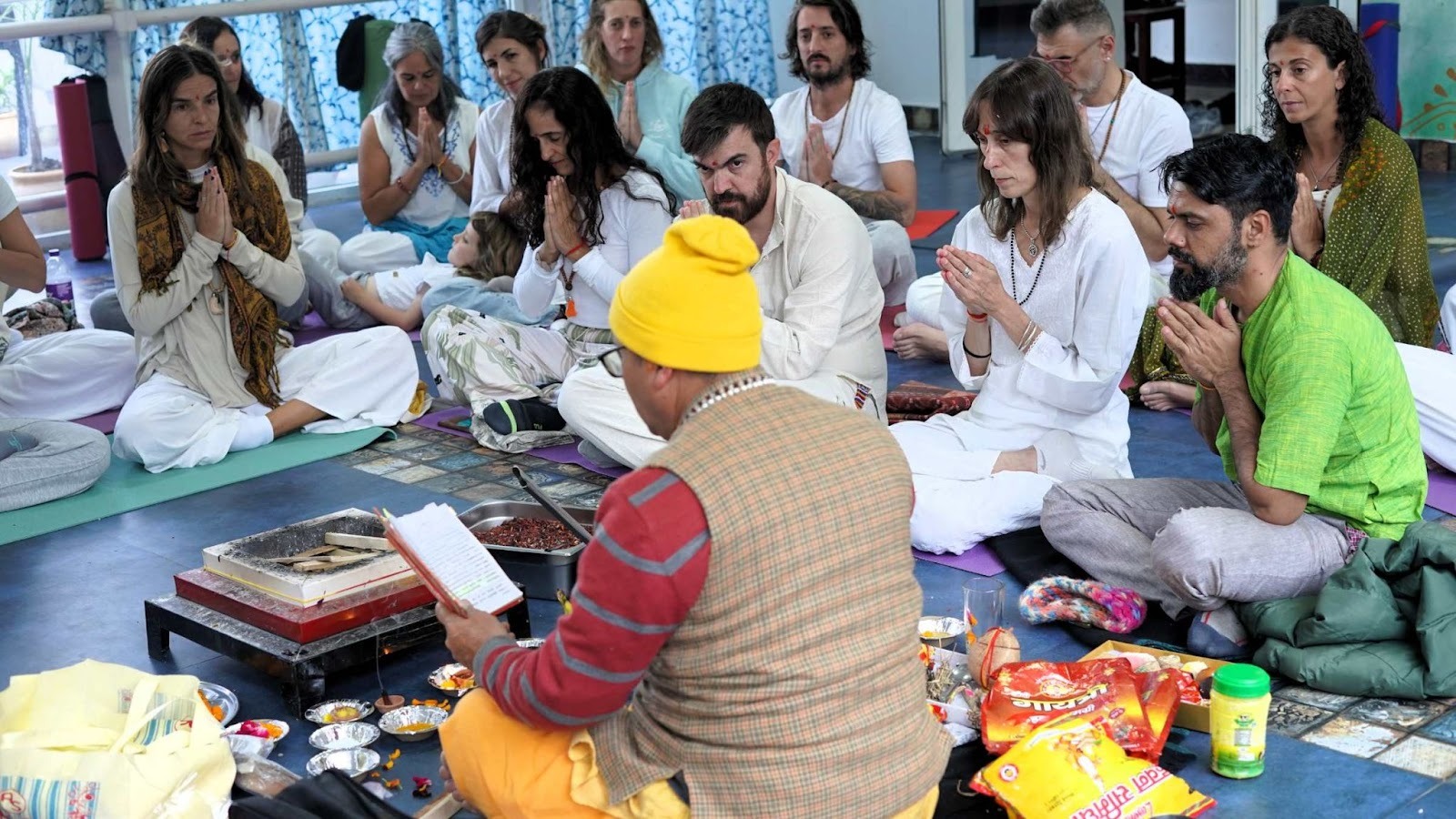
Integrating Bhagavad Gita Teachings into Daily Life
The brilliance of the Bhagavad Gita lies in its practicality. It does not demand renunciation but encourages living spiritually within the material world. By integrating its wisdom, we can bring calm awareness and purpose to every action.
1. Cultivate Detachment in Action: Perform your duties wholeheartedly but remain detached from success or failure. This helps maintain inner stability and reduces anxiety.
2. Embrace Equanimity: The Gita’s philosophy of Samatvam Yoga Uchyate, “Equanimity is Yoga”, reminds us to stay balanced in joy and sorrow, gain and loss.
3. Practice Mindful Awareness: Bring mindfulness into everyday moments, eating, working, walking, or conversing. Awareness transforms mundane tasks into sacred acts.
4. Surrender the Ego: Letting go of pride and control allows the divine flow of life to guide us. When we surrender, peace and clarity arise naturally.
5. Seek Knowledge and Reflection: Regular self-inquiry and spiritual reading foster growth. The Gita encourages questioning and introspection to discover our higher purpose.
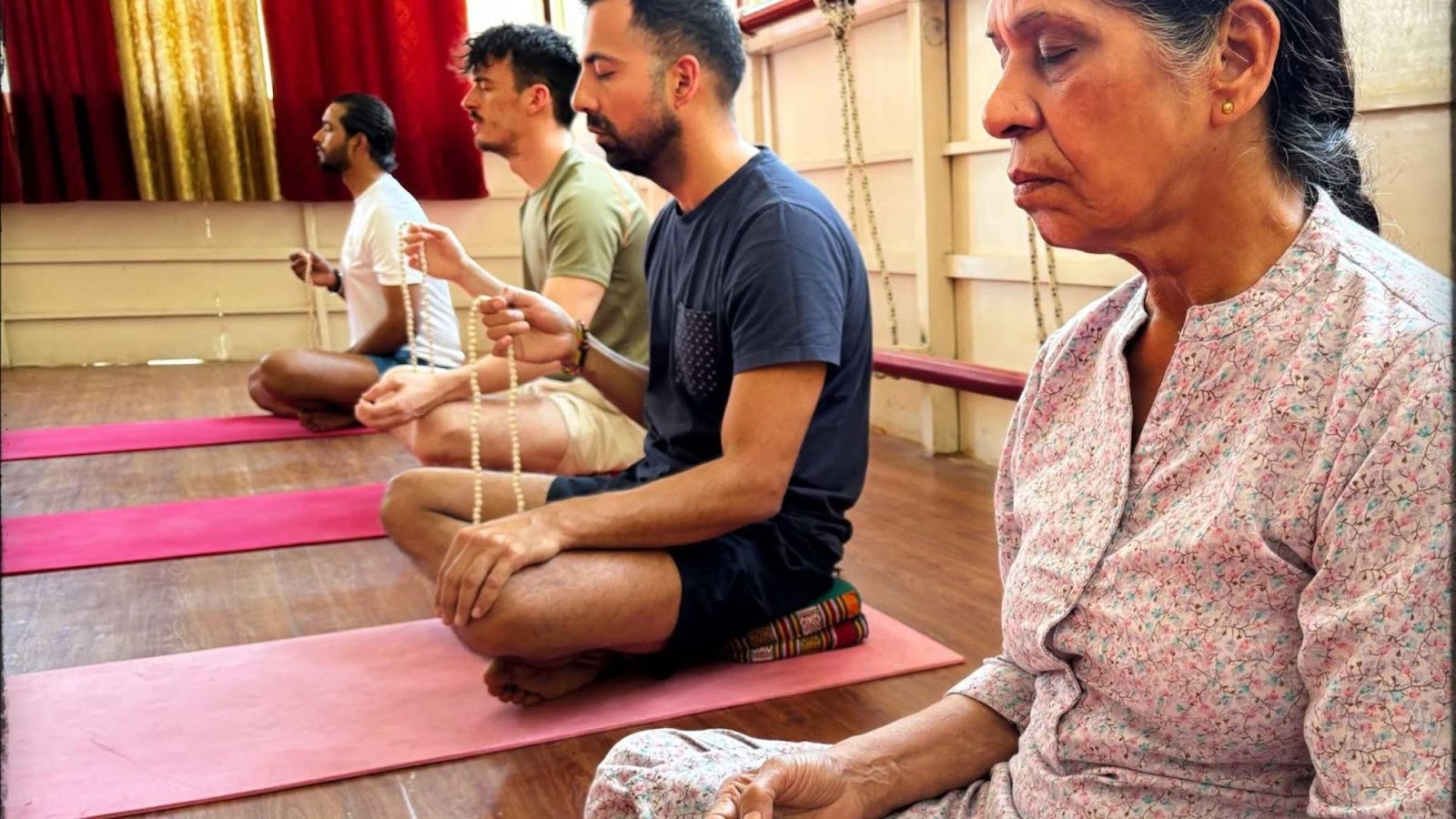
6. Meditate Daily: Even a few minutes of meditation reconnects us with the stillness within. It strengthens focus, reduces stress, and deepens spiritual insight.
Awaken Your Inner Balance through the Gita’s Teachings at Saptkaya Yoga School
At Saptkaya Yoga School, we believe that yoga is not limited to asanas; it is a way of living inspired by the Bhagavad Gita’s wisdom. Our programs combine traditional teachings, Ayurvedic principles, and modern well-being practices to create a holistic path toward self-realization.
Through our 4-Day and 7-Day Yoga Retreats in Rishikesh, participants experience the union of yoga, Ayurveda, and meditation much like the integrated path taught by Lord Krishna himself. Personalized Ayurvedic therapies, sound healing sessions, and daily yoga classes help cleanse the body and mind, aligning one’s energy with balance and clarity.
Whether you are a beginner seeking peace or an advanced practitioner exploring spiritual depth, Saptkaya Yoga School in Rishikesh offers a sacred space to embody the wisdom of the Bhagavad Gita and live yoga beyond the mat.
Timeless Relevance of the Bhagavad Gita in Modern Life
In an era of information overload, competition, and constant change, the teachings of the Bhagavad Gita offer grounding and clarity. They guide us to navigate challenges with wisdom and grace.
Whether you’re a professional seeking balance, a student exploring purpose, or a spiritual aspirant on a path of awakening, the Gita’s message resonates universally. It teaches us that peace does not depend on external conditions but emerges from inner harmony.
Yoga philosophy, as presented in the Bhagavad Gita, is not confined to the mat or meditation hall. It’s a living practice, a way of being that infuses consciousness, compassion, and clarity into every moment.
By embodying these teachings, we begin to see life not as a battlefield of stress and confusion, but as a divine journey toward self-realization and universal love.
Conclusion
The Bhagavad Gita is not merely a scripture; it is a timeless manual for life, a guide that teaches us who we truly are and how to live with wisdom, peace, and purpose. Its teachings on the paths of Karma, Bhakti, Jnana, and Raja Yoga offer a complete framework for both spiritual and personal growth.
At Saptkaya Yoga School, we bring these ancient teachings into practice, guiding individuals to experience transformation not only through yoga postures but through the integration of mind, body, and soul.
When accepted sincerely, the wisdom of the Gita reshapes our perception, helping us transcend fear, ego, and confusion, leading toward true freedom and inner bliss.